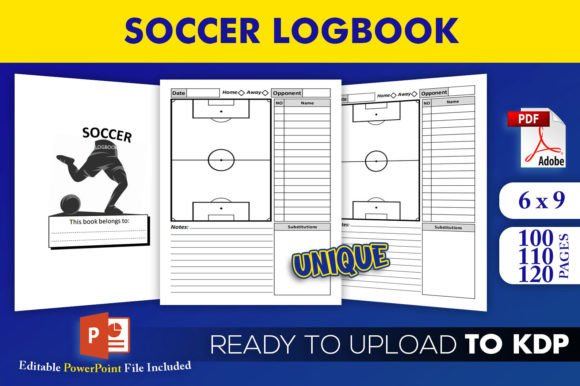
Soccer Logbook KDP Interior Template for Easy Publishing
Organizing soccer statistics, match notes, and season records often means wrestling with scattered spreadsheets or generic notebooks that don’t really fit the task. Whether you’re a coach tracking player development, a parent capturing memorable games, or a creative entrepreneur building a low-content book brand, the right tool can turn messy data into a clean, professional resource. That’s where a well-designed interior template comes in. The Soccer Logbook KDP Interior Template exists to bridge the gap between a blank page and a finished, market-ready interior—without spending hours on layout and formatting.
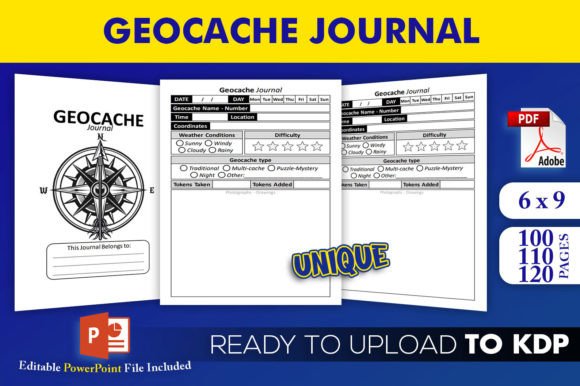
This isn’t a pre-filled record book. Instead, you get a set of structured, editable, and print-ready templates built specifically for soccer-related logging. The package includes an editable PowerPoint source file and three PDF interiors at 100, 110, and 120 pages, all in a 6x9 trim size with no bleed. Because the files have been tested on KDP, you avoid the technical guesswork that often leads to upload rejections or formatting headaches. The practical outcome is more time refining your content or branding, less time wrestling with margins and file specifications.
What Makes a Purpose-Built Soccer Logbook Interior Valuable
Many low-content book creators start with generic notebook interiors—lined or dot-grid pages that work for anything but don’t align tightly with a niche. A soccer-specific logbook changes that. When you open a page designed for soccer, the prompts and layout signal immediate relevance to the reader. That relevance matters a great deal on platforms like Amazon KDP, where a shopper scanning for “soccer season tracker” or “match log journal” makes a split-second decision based on the “Look Inside” preview.
The template’s structure guides the logging process naturally. Instead of staring at a blank page wondering what to write, the user sees designated spaces for opponent, date, score, player notes, goals, assists, and reflections. This consistency isn’t just about aesthetics—it supports more accurate record-keeping over time. Coaches using the same logbook across multiple seasons can spot trends more easily. Parents tracking a child’s progress from U10 to U12 get a clear visual story of development. The design does the heavy lifting of organization, so the person filling it in can focus on the game itself.
Flexibility Through an Editable Source File
One of the more important yet often overlooked features here is the editable source file in PowerPoint (pptx). Most ready-to-upload KDP interiors arrive as locked PDFs. While convenient, that format limits what you can adjust. Want to change a header from “Match Notes” to “Training Session Notes”? Add your brand name or a subtle logo? Tweak the font to match a cover design you already have? With a static PDF, you’re stuck.
The included PPTX file gives you creative control without requiring high-end design software. PowerPoint is widely accessible and familiar. You can modify text, shift elements, insert pages, or adjust colors before exporting your own print-ready PDF. This flexibility helps small publishers create multiple variants for different soccer niches: a youth development journal, a goalkeeper-specific log, a tournament tracker, or a plain game diary for adult recreational leagues. You aren’t limited to the exact design delivered; you have a solid foundation that adapts to your specific audience.
Even if you don’t plan to sell these on KDP, the editable file supports personal use. A coach might customize the interior to include the team crest and specific stat categories relevant to their league. An educator running a soccer-themed math project could add data-tracking tables. The template becomes a starting point rather than a final, unchangeable product.
Three Page Counts for Different Use Cases
The download includes three PDF interior files with 100, 110, and 120 pages, all in 6x9 trim size with no bleed. This variety addresses a practical publishing reality: page count affects book thickness, spine design, printing cost, and perceived value. A thinner 100-page logbook might suit a single-season record, while a 120-page version covers multiple seasons or includes extra reflection sections. Having options means you can test what resonates with your target buyers without commissioning separate designs.
Consider a few realistic scenarios. A freelance graphic designer packaging low-content books for side income might launch both a compact “Soccer Season Log (100 pages)” and a deluxe “Soccer Memory Keeper (120 pages).” The same template serves both, with the page count adjusted before upload. A youth soccer club creating physical handbooks for parents could choose the 110-page version, which feels substantial but not overwhelming. Even for personal projects, this range removes the guesswork of “how many pages do I really need?” You pick what matches the intended lifespan of the logbook.
Because the files have been tested on KDP, you know the PDF specification aligns with Amazon’s requirements. That’s a meaningful stress-reducer. KDP’s automated checks sometimes flag embedded fonts, incorrect margins, or unintended transparency layers. Pre-tested files reduce the trial-and-error loop many first-time publishers experience. You still need to upload responsibly, but you start from a verified baseline.
“No Bleed” and High-Resolution Simplicity
The no bleed specification is easy to ignore if you’re new to print design, but it significantly simplifies the production process. Bleed typically requires extending background images or color beyond the trim edge to ensure no white slivers appear after cutting. For a logbook with structured tables and text-based layouts, bleed is unnecessary and can complicate file setup. A no-bleed interior means the design stops cleanly at the page edge. KDP handles no-bleed files smoothly, and your printed book doesn’t risk cropping off important content near the gutter or outer edges.
Paired with high-resolution interiors, this ensures crisp, readable layouts. Blurred text or fuzzy lines scream amateur production, which can hurt reviews and returns. A high-res file keeps score tables, header text, and any subtle graphic elements sharp. For customers who spend a whole season jotting down notes by hand, clear print quality matters at a tactile level: the pen glides over cleanly printed lines, and the whole experience feels more premium.
Who Stands to Benefit Most
While the template suits a broad audience, a few groups may find it particularly useful. Self-publishers and KDP entrepreneurs gain a market-tested interior they can brand, customize, and list quickly. The soccer niche on Amazon remains competitive, but well-designed interiors help differentiate your book from hasty, generic alternatives. If you’ve struggled with cover-to-interior mismatch—where a beautiful cover leads to a plain, uninspired inside—a purpose-built template solves that consistency problem.
Coaches and sports program coordinators can adapt the template for internal team materials. Imagine printing a dozen logbooks for a travel team, each customized with categories like “Set Play Analysis” or “Fitness Milestones.” The editable PPTX makes that feasible without hiring a designer. Similarly, parents and family organizers who want to preserve soccer memories in a structured way benefit from the intuitive layout. Instead of a messy notebook filled with sporadic notes, you have a dedicated space that prompts meaningful reflections after each match.
Educators and camp directors incorporating soccer into physical education or summer programs can use the logbook as a teaching aid. Students might track their own progress, record friendly match results, or complete goal-setting exercises. Because the interior is clean and age-neutral, it works for middle schoolers as well as adult recreational leagues.
Yet it’s worth noting that this template isn’t a fit for every situation. If you need a highly illustrated, graphic-heavy design with complex infographics, the PowerPoint-based source file might feel limiting. Advanced users wanting layered Adobe Illustrator files or editable vectors should compare options. Likewise, if your soccer logbook concept requires bleed for decorative backgrounds, a no-bleed template won’t align with that vision. These aren’t flaws—just design parameters to consider before committing.
Practical Tips for Making the Most of the Template
When you first open the files, resist the urge to upload immediately. Spend time in the PPTX source file thinking about your end user. Ask: what information would a coach, player, or parent value on every page? Maybe you add a “Key Takeaway” box at the bottom of each match log page. Perhaps you insert a seasonal summary table to bookend each section. Small, thoughtful adjustments elevate a standard interior into something your audience feels was made for them.
Also pay attention to the connection between your cover design and the interior style. If your cover uses bold, modern typography, you might adjust the PPTX headers to echo that font style. Consistency builds trust. Before uploading the PDF to KDP, take advantage of Amazon’s online previewer to verify that margins, page numbering, and alignment meet expectations. Even though the files are pre-tested, slight tweaks on your end—like changing page count or inserting new elements—can shift the layout. A quick preview check catches any small issues.
- Customize the PPTX to match your niche (club log, training journal, etc.).
- Decide on the ideal page count from the three provided options.
- Export to PDF, then check the file in KDP’s preview tool.
- Pair the interior with a cover that sets accurate expectations.
- Consider creating a quick user guide or example page for your book’s description to help buyers understand the layout.
Beyond Publishing: Everyday Applications
Not everyone who downloads this template intends to sell books. A local rec league coordinator might print a handful of bound copies for team managers. A private soccer trainer could use the logbook as a student progress report, filling in details after each session and presenting parents with a polished season summary. Because the interior is professionally structured, the resulting output communicates care and attention to detail—values that matter in coaching and client-facing roles.
There’s also a creative hobbyist angle. Some people simply enjoy the process of making something tangible. Designing a custom soccer journal for a child’s first travel team season, then having it printed and bound, creates a personal keepsake far more meaningful than a store-bought notebook. The editable source file lets you add team photos, motivational quotes, or inside jokes that turn a standard logbook into a personalized artifact.
What the Download Includes and Why It’s Thoughtfully Assembled
Your download includes an editable source file in PowerPoint pptx format, three PDF interiors ready for upload to KDP or print—these files have been tested on KDP—a 6x9 trim size with no bleed, and different interior pages of 100, 110, and 120 pages, all at high resolution. This combination addresses several practical pain points at once: time (no layout from scratch), compatibility (KDP-tested), flexibility (editable source + multiple page counts), and professional output (high-res, no-bleed print quality).
The 6x9 trim size is a standard for trade paperbacks, striking a comfortable balance between portability and writing space. It’s not too small to cramp handwriting, nor so large that it feels unwieldy in a coach’s bag. The no-bleed design further ensures that automated printing processes won’t introduce unexpected cropping issues. For creators nervous about technical specs, this bundle reduces barriers significantly.
If you’re evaluating whether this template aligns with your goals, consider the core outcome: you get a foundation that shifts the work from “design a logbook from zero” to “customize a professional base to suit specific needs.” That shift can trim days or weeks from your publishing timeline, especially if you aren’t a full-time designer. It also lowers the risk of formatting errors that lead to negative customer feedback. In a marketplace where presentation often determines perceived value, starting with a clean, tested interior is a quiet but powerful advantage.
Ultimately, the Soccer Logbook KDP Interior Template isn’t about flashy innovation—it’s about solving a real, recurring need with practical tools. Whether you’re publishing for profit, coaching a team, or preserving family memories, having a ready-to-use, adaptable system can turn a tedious preparation task into a straightforward, even enjoyable step. That’s the kind of quiet efficiency that adds up over time, letting you focus on the game and the stories worth recording.