Anxiety Journal Interior Template COVER
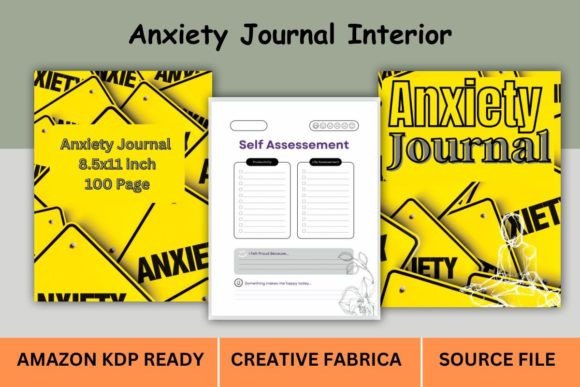
You’re looking at a ready-to-edit KDP interior bundle that gives you not just the pages, but the full cover file, all set for an 8.5 by 11 inch anxiety journal. It’s not a vague collection of prompts. It’s a complete 100-page black-and-white interior with bullet-style structure, delivered in CMYK and built for Amazon KDP, Etsy printables, or any print-on-demand shop. The source files are included, which means you can open them in Adobe Illustrator or similar software, tweak the fonts, add your logo, adjust the spacing, and hit publish without starting from scratch.
When a Pre-Built Interior Saves More Than Just Time
If you’ve ever tried to format a 100-page journal for print, you know how the small things eat up hours: margin creep, inconsistent line weights, checking whether every page falls within the safe zone. This Anxiety Journal Interior Template COVER removes that friction. Instead of designing from a blank artboard, you’re editing something that already respects KDP’s trim and bleed requirements. The files are 300 DPI, which is the print standard that prevents blurry output, and the CMYK color profile ensures your blacks stay crisp and your grays don’t shift when the book is manufactured.
Many creators, especially those balancing multiple side projects, don’t need another design lesson. They need a clean, minimal interior they can customize quickly and confidently. That’s where a template like this fits. You can load the AI or EPS source file, swap in your own section titles, maybe add a few extra pages for a habit tracker or a gratitude log, and still have a print-ready PDF in one afternoon.
Who Actually Uses an Anxiety Journal Interior Template COVER
The obvious group is KDP low-content publishers who are building a catalog of notebooks and journals. But that’s only half the picture. Therapists and counselors sometimes create client-facing workbooks for private practice. Having a professionally typeset interior that already understands anxiety journaling flow means they can focus on the therapeutic content, not on learning InDesign. The same goes for life coaches who want a branded anxiety toolkit to share during workshops or online courses. They can drop in their own logo on the cover file, adjust the interior headings to match their voice, and offer a physical or digital product that feels cohesive.
Small business owners in the wellness space, like yoga instructors or mindfulness bloggers, often use such templates to produce merchandise that supports their existing services. Instead of recommending a generic journal, they sell or give away one that aligns with their teaching style. With the source file included, they can translate the interior into different languages or modify the bullet structure to suit a specific anxiety management method, like CBT-based check-ins or somatic tracking prompts.
Real Scenarios Where This Template Shines
Consider a freelance marketer who runs an Etsy store on the side. They notice demand for printable anxiety relief journals but don’t have the time to prototype multiple layouts. They download the Anxiety Journal Interior Template COVER, open the AI file, adjust the cover text to say “30-Day Calm Reflection,” and upload both the interior PDF and cover to KDP. In a few hours, they have a new listing. The 100-page count hits a sweet spot—substantial enough that customers see value, yet not so thick that it pushes printing costs too high.
Another scenario: an educator designing a campus mental health resource. They need something reproducible and affordable. They edit the template, remove a few sections that don’t fit, add college-specific crisis numbers on the first page, and print a short run locally. Because the original files are high resolution and properly set in CMYK, the local printer doesn’t reject the artwork. That reliability matters when you’re ordering a couple hundred copies for a student wellness event.
A writer who publishes fiction on KDP might also find this useful as a add-on freebie. Offering a companion anxiety journal to a novel that deals with mental health themes can build reader connection. They download the template, customize the cover to match their book’s aesthetic, and enroll it in a series. The consistent formatting across interior pages makes the final product look intentional, not thrown together.
Why the “Simple B W” Design Works Across So Many Contexts
Minimal black-and-white interiors have a practical advantage. They print cleanly on any press, keep file sizes manageable, and don’t distract from the user’s own handwriting. When someone opens a journal like this, they’re not admiring elaborate borders; they’re filling in their thoughts. The bullet format offers enough structure to guide daily or weekly reflection without dictating what someone must write. This flexibility means the same interior can be repurposed as a general stress log, a panic attack tracker, a sleep hygiene diary, or even a parenting reflection tool—just by changing the cover and the section labels.
Because the files are CMYK, what you see on screen aligns more closely with the final print. RGB designs often shift when converted, leading to muddy grays or unexpected warm tones. Avoiding that surprise is crucial when you’re selling a product that customers will hold in their hands. And with the 8.5x11 trim size, the journal sits comfortably on a desk or fits into a standard binder, which broadens its appeal for office settings, clinic waiting rooms, or home study areas.
How Different People Benefit in Different Ways
- Publishers who prize speed: The “100 ready files” advantage is real, but it’s not just about volume. Having the cover included as a separate editable file means you don’t have to design a complementary cover from scratch. That cuts launch time significantly, especially if you’re testing multiple niches simultaneously.
- Design novices: Opening an AI or EPS file can be intimidating, but the key benefit is that you don’t need to start with a blank canvas. You can make small, safe edits—changing text in the cover, adjusting the year or logo—without touching the underlying layout grid. You learn by modifying, which is far less risky than designing from zero.
- Content creators: Even if you never sell a journal, you can use the interior template as a lead magnet. Export a watermarked sample, offer the full printable as an incentive for newsletter signups, or incorporate it into a digital course. The PDF and EPUB formats mentioned in the file specs mean you’re not locked into print; you can distribute digitally through platforms like Gumroad or Teachable.
- Print-on-demand hobbyists: Many people discover KDP as a creative outlet, not necessarily to build a six-figure business. They enjoy the process of crafting something tactile. For them, the template makes the technical side feel manageable. They can experiment with cover colors and paper types, safe in the knowledge that the core interior layout is already production-tested.
What You Should Examine Before Editing and Publishing
Even with a ready-made interior, a few checks will prevent headaches later. First, open the source file in software that truly supports AI or EPS formats. Free online converters sometimes alter alignments or flatten layers, which defeats the purpose of having an editable template. If you don’t have Illustrator, look at Affinity Designer or Inkscape, but always verify that the CMYK profile remains intact after opening.
Second, review the trim size and page count carefully. The template is built for 8.5x11 inches with 100 pages. If you want to change the trim size, you’ll need to resize every page proportionally and recheck margins—a task that isn’t trivial. Similarly, adding or removing pages requires you to maintain the file’s flow so that odd and even pages still align. Many new publishers forget that blank left-hand pages in a printed book can break the user experience. If you insert new sections, make sure the facing pages still feel intentional.
Third, think about bleed. Even though the interior is largely black and white, if any element extends to the edge—like a solid header bar or a thin line—you need to ensure the bleed settings are correct in your final PDF export. KDP has specific bleed requirements (typically 0.125 inches on each side for books with bleed). The included files likely already account for this, but after you edit, re-export with the proper settings. Don’t assume the original bleed transfers automatically.
Fourth, customize the content in a way that matches your audience’s reading level and context. An anxiety journal for teenagers might need simpler language and slightly larger fonts. One for high-pressure professionals could incorporate time-blocking spaces alongside reflection prompts. The template gives you the skeleton; your understanding of your audience puts meat on the bones. You can rename “Anxiety Log” to “Daily Check-In” or “Thought Record” without disturbing the consistent bullet formatting.
Fifth, consider the commercial aspect. If you plan to sell on Amazon, the cover file must be a separate PDF, and the interior must not include the cover or any front matter that mimics it. The included cover file makes that separation clear. But also check that any fonts you embed are licensed for commercial use. The template likely uses basic fonts, but if you swap them, verify the license. A font violation can get your book blocked.
Connecting Features to Real-World Results
When the product description says “High Resolution Source File Included for Direct Print,” that directly translates to fewer customer complaints about smudged text. When it says “CMYK Color Format for Print,” you can expect less back-and-forth with the printer about why the cover looks different on screen. These aren’t abstract technicalities. They’re the details that separate a professional-looking book from one that gets returned because the text is fuzzy or the margins cut off the content.
The fact that the template bundle includes both a ready KDP cover and an EPUB format means you can cater to two markets at once: print buyers and digital readers. Some of your customers may prefer a Kindle version where they can type directly into the journal on a tablet. By having an EPUB starting point, you can adapt the responsive layout without building it from scratch, though you’ll still need to make it interactive if you want fillable fields.
Finally, the “100 READY FILES FOR PUBLISHED ON AMAZON KDP” phrasing isn’t just marketing. It emphasizes that this isn’t a half-baked file that needs major rescue work. You can literally upload the interior PDF and cover file as-is and have a sellable product. That’s liberating when you’re validating an idea. You can test whether an anxiety journal niche has demand without investing weeks of labor. If it sells, you can iterate; if it doesn’t, you haven’t lost much beyond the download price and a couple of hours of setup.
When a Template Becomes More Than a Tool
For many people, working with a structured interior like this becomes a quiet teacher. As you tweak the bullet spacing or adjust the section headers, you naturally learn about book interior design—how leading affects readability, why symmetrical margins calm the eye, how a well-placed line break can create a breathing moment before the next prompt. These insights often spill over into your next project. The next time you create a planner or a gratitude journal, you’ll recognize what made this anxiety template feel safe and approachable. That knowledge is impossible to capture in a bullet list of features.
Ultimately, an Anxiety Journal Interior Template COVER is a pragmatic starting point. It doesn’t pretend to be a custom boutique design, and that’s its strength. It’s economical, transparent in its construction, and focused on usefulness. Whether you’re building a self-publishing brand, supporting mental health conversations in your community, or simply creating a personal journal that you’ll never sell, the combination of the black-and-white interior and the included cover file puts you hours ahead of where you’d be otherwise. And in a world where time, attention, and peace of mind are scarce, that head start matters.