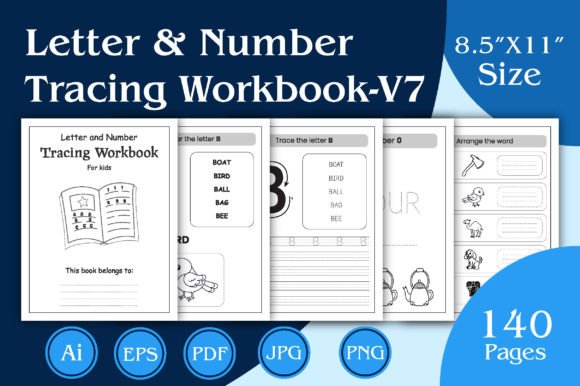
Letter and Number Tracing Workbook-7: Activities & Uses
When a child first picks up a pencil, the blend of excitement and wobbliness is unmistakable. A well-planned tracing workbook can turn those shaky marks into controlled letters, numbers, and eventually words. Letter and Number Tracing Workbook-7 packages that learning journey into a single, ready-to-print resource. More than just dotted lines, it combines uppercase letter tracing, lowercase letter tracing, number work, word rearrangement, and line control exercises across 140 pages. Yet its value shifts depending on who holds it—a parent, a teacher, a publisher, or a creative entrepreneur. This article walks through the workbook’s structure and explains how different people might use it, what they might prioritize, and whether it aligns with their specific goals.
What You’ll Find Inside
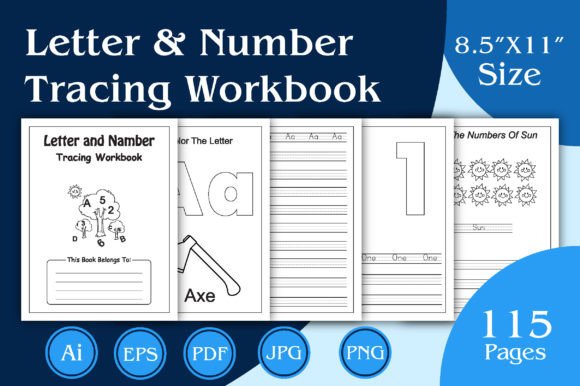
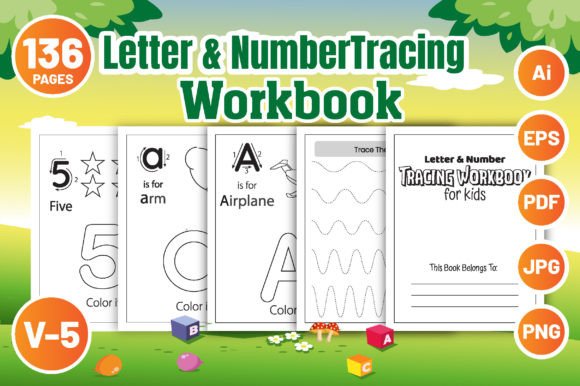
The workbook organizes early writing practice into five distinct activity types. First, there are dedicated sections for tracing uppercase A‑Z and lowercase a‑z, giving children repeated exposure to both letter cases. A full number tracing section covers digits 0 through 9, often including playful counting cues. Then the word rearrange activities challenge kids to unscramble short words, building early spelling awareness. Finally, line tracing exercises work on pencil control—straight paths, curves, zigzags, and loops that prepare small hands for fluid letter formation. The book is designed at 8.5″ x 11″ with no bleed, making it straightforward to print at home or send to a print shop. The download bundle includes a high-resolution PDF, fully editable Ai and Eps files, plus JPG and PNG formats, giving users multiple ways to integrate the pages.
For Parents and Home Caregivers
A busy parent might look at Letter and Number Tracing Workbook-7 as a way to reduce screen time while building a child’s fine motor skills. The priority here is ease of use and clarity. They need pages that print without fuss, have large enough letters for a three‑ to five‑year‑old, and don’t require hours of prep. Many parents print a few pages at a time, sliding them into dry‑erase pockets so a child can practice again and again. The word rearrange section might be something they return to once letter recognition is solid, extending the workbook’s lifespan. For these families, a single purchase that covers multiple developmental stages—from pencil grip to word play—holds genuine practical value.
For Early Childhood Educators
Preschool and kindergarten teachers look for resources that align with curriculum milestones while saving planning time. The workbook’s division into focused segments helps. A teacher can use the line tracing pages during a fine motor center and the number tracing sheets during math rotations. The word rearrange exercises support phonemic awareness and early spelling, fitting nicely into literacy blocks. Because the files come in editable formats, an educator can adapt certain pages—perhaps enlarging a letter, changing a font, or adding a child’s name to personalize the experience. Reliability matters here: the pages need to be consistent, clear, and free of distracting clutter so young learners can focus on the tracing task itself.
For Creators, Bloggers, and Small Business Owners
Someone who sells printables, runs a membership site, or offers educational resources on platforms like Etsy or Teachers Pay Teachers will evaluate this product through a commercial lens. The inclusion of fully editable Ai and Eps files is significant for them. It means they can rebrand the workbook, add their own logo, tweak the layout, or extract individual pages to create smaller lead magnets. The 140‑page count provides substantial raw material. For a blogger, the PNG and JPG versions can illustrate blog posts about handwriting readiness, child development, or homeschooling routines. A small business owner who runs a subscription box for kids’ activities might print and bind a customized version as an exclusive insert. For these users, flexibility and commercial usability often outweigh any single activity design.
For Publishers and Print‑on‑Demand Entrepreneurs
A self‑publisher looking to expand a low‑content book lineup will appreciate the technical specifications. The 8.5″ x 11″ size and no‑bleed design are standard requirements for many print‑on‑demand platforms like KDP. With 140 pages, the book is thick enough to feel substantial yet straightforward enough to format. The editable source files mean the publisher isn’t locked into a static design; they can adapt the interior to match a series, change colors, or reorder sections. However, they’ll also scrutinize the quality of the artwork and the tracing lines—blurry or inconsistent files lead to customer returns and negative reviews. Here, the high‑resolution nature of the provided formats is not just a feature but a baseline requirement for a successful product.
Uppercase and Lowercase Letter Tracing
Rather than throwing every letter onto a single page, the workbook offers dedicated practice for each letter. This gives children the chance to trace a letter multiple times before moving on. The separation of uppercase and lowercase sections lets adults introduce them in any order they prefer—some start with uppercase because straight lines are simpler, while others teach both forms of a letter together. For a first‑time parent or a new teacher, this structure removes guesswork. For a creator, having the uppercase and lowercase sets as distinct blocks inside the editable file makes it easier to pull just the pages they need for a mini‑book or a targeted worksheet pack.
Number Tracing 0–9
Number shape is often overlooked in early literacy conversations, but writing a clear “5” or “8” requires just as much motor control as letter writing. The number tracing section pairs each digit with a visual counting cue, helping children connect the symbol with quantity. A homeschooling parent might pair these pages with small objects like buttons or raisins to reinforce one‑to‑one correspondence. A tutor working with a child who reverses numbers can print the same page several times for extra repetition. Editable files also allow a therapist or specialist to adjust the stroke order arrows or add additional visual supports for children who need them.
Word Rearrange and Line Tracing
The word rearrange puzzles are a bridge between letter recognition and real reading. Children see a mixed‑up sequence, like “c a t,” and learn to put the letters in the correct order to form a familiar word. This activity supports working memory and phonics. It also adds a playful problem‑solving element that plain tracing doesn’t offer. The line tracing section, often placed early in the workbook, builds the foundational pencil control needed for all other pages. Teachers may use these before introducing formal letter shapes, while occupational therapists often incorporate similar patterns to develop hand strength and coordination.
How the Download Format Expands Possibilities
The workbook arrives as a bundle of five file types, and each serves a distinct purpose. The PDF is the print‑ready version most end users will rely on. Ai and Eps files are the fully editable source materials, valuable for anyone who needs to customize the content—adjust margins for binding, translate the text, or change the font to match a handwriting curriculum. PNG and JPG images let users drop a single page into a presentation, a worksheet builder, or a digital app for tablet practice. A therapist might annotate a JPG page with a stylus during a teletherapy session. A marketer might use the PNG images in an ad for their online course. The sheer versatility of the file package means the workbook can live far beyond its original printed form.
Factors Different Users Weigh Most
Beginners—a parent trying their first activity book—care about simplicity. They want a file that opens on any device, prints crisply on standard paper, and keeps their child engaged for a reasonable amount of time. They may never need the Ai file, but the fact that it exists doesn’t hurt.
Experienced creators care about quality, originality, and the ability to modify. They’ll inspect the artwork for smooth vector curves, check the layers in the Ai file, and consider whether the workbook’s design fits their brand. The no‑bleed feature matters to them because it prevents content from being trimmed off during professional printing.
Educators and therapists look through the lens of developmental appropriateness. They consider stroke order, line spacing, the size of the tracing guides, and whether the activities build skills in a logical sequence. They appreciate that the word rearrange pages add a cognitive element beyond simple tracing, keeping the workbook from feeling repetitive.
Business‑focused buyers evaluate the commercial potential. They ask whether the workbook can be rebranded, resold, bundled, or used as a bonus. The editable source files eliminate design bottlenecks and speed up production time. For them, the workbook is less a finished product and more a customizable asset.
Is Letter and Number Tracing Workbook-7 the Right Fit for You?
Your answer depends on what you aim to accomplish. If you need an all‑in‑one printable that moves a child from wobbly lines to confident letter and number formation, the 140 pages offer a structured path with enough variety to hold a young learner’s attention. If you are a creator or business owner looking for raw material that can be shaped into something new, the fully editable files and multiple format options provide a strong starting point without starting from scratch. The workbook does not promise to replace a full handwriting curriculum, but it delivers a rich set of practice pages and pencil control exercises that can supplement many learning environments. By understanding your own priorities—whether those lean toward convenience, customization, developmental support, or commercial flexibility—you can decide if this resource earns a place on your hard drive or printing queue.