Evaluating the Letter and Number Tracing Book for KDP-5 as a Ready-Made Interior for Children’s Activity Books
Creating educational content for young learners requires a thoughtful blend of design, functionality, and developmental appropriateness. The Letter and Number Tracing Book for KDP-5 and its companion, the Letter and Number Tracing Workbook for Kids volume 5, present a ready-to-use interior solution that bundles uppercase letter tracing, lowercase letter tracing, number practice, and pencil control exercises into a single 136-page format. For self-publishers, educators, and parents evaluating low-content book options, understanding what this product offers—and where its limitations lie—can make the decision process clearer.
What Exactly Is the Letter and Number Tracing Book for KDP-5?
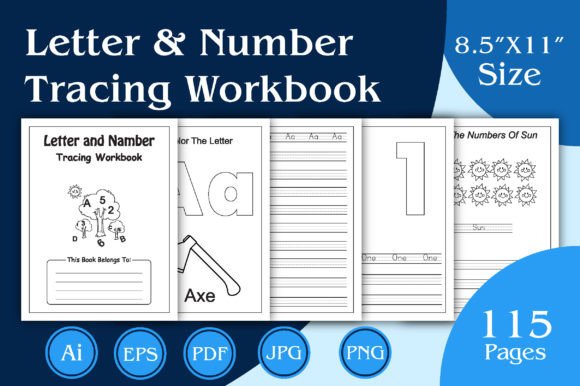
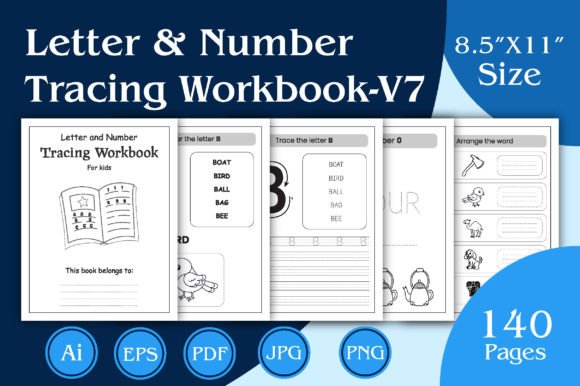
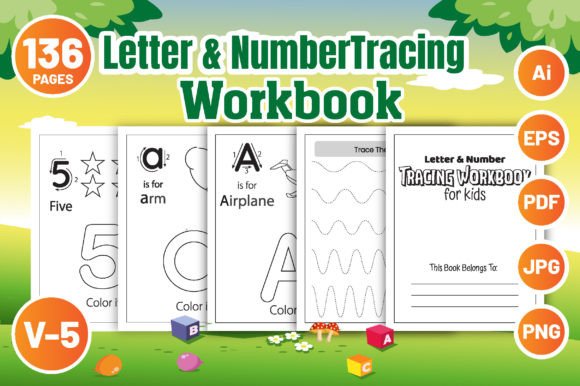
At its core, this product is a downloadable interior file package designed specifically for Kindle Direct Publishing and similar print-on-demand platforms. The contents follow a structured progression: uppercase letter tracing from A to Z, lowercase letter tracing from a to z, number tracing from 0 to 9, and a dedicated pencil control section that helps children develop the fine motor skills necessary for writing. The download includes multiple file formats—AI, EPS, PNG, JPG, and PDF—giving users flexibility in how they handle the artwork. With dimensions set at 8.5 by 11 inches and no bleed, the layout is optimized for standard printing specifications. The total of 136 pages provides a substantial volume of practice material without requiring the publisher to design individual pages from scratch.
The inclusion of high-resolution, fully editable vector files means that someone with basic design software knowledge can make adjustments, but the product is equally functional as a straight-to-print solution for those who prefer not to modify anything. This dual appeal is part of what makes the offering worth examining closely.
Why Someone Might Consider This Interior Package
Several user groups find value in a pre-made tracing workbook interior, and their motivations differ. Understanding these perspectives helps place the product in the right context.
KDP Publishers Seeking Efficient Content Creation
For independent publishers building a catalog of educational books, time is a significant resource. Designing 136 pages of tracing exercises from scratch involves not only layout skills but also an understanding of early childhood writing progression. The Letter and Number Tracing Book for KDP-5 removes that initial design burden. A publisher can download the files, potentially add branding or a cover, and move toward publication faster than if they commissioned custom illustrations or built the interior page by page. The ready-for-print nature of the PDF means the technical formatting—margins, sizing, no-bleed setup—has already been handled for an 8.5 by 11-inch trim size, one of the most common dimensions for children's workbooks on Amazon.
Parents and Caregivers Looking for Structured Practice
Not every user is a publisher. Some buyers are parents, homeschoolers, or caregivers who simply want a well-organized practice book for their child. In this case, the printable PNG and JPG files allow for at-home printing of individual pages or the entire workbook. The sequential arrangement—uppercase letters, lowercase letters, numbers, then pencil control—mirrors the way many early childhood educators introduce writing skills, making it a logical supplement to preschool or kindergarten learning.
Educators and Therapists Needing Reproducible Resources
Teachers and occupational therapists often look for materials that support fine motor development and handwriting readiness. The pencil control section, which typically includes lines, curves, and shapes that precede letter formation, addresses a genuine developmental need. Having these exercises alongside letter and number tracing creates a comprehensive single source rather than requiring multiple separate workbooks.
Evaluating the Benefits and Strengths
Looking objectively at what the product delivers, several practical advantages stand out.
- Comprehensive scope in one package: Combining uppercase, lowercase, numbers, and pencil control into one volume means the end user gets a full handwriting preparation system. This bundling can be more appealing to customers than purchasing separate books for each skill.
- Multiple file format support: The inclusion of AI, EPS, PNG, JPG, and PDF files accommodates different workflows. A publisher who uses Adobe Illustrator can work with the AI file; someone who prefers free software can use the high-resolution PNGs; and the PDF serves as the immediate print-ready option.
- No-bleed design: For KDP publishing, no-bleed interiors simplify the upload process and reduce the risk of formatting rejections. The 8.5 by 11-inch size is a standard that fits most home printers as well as commercial printing services.
- 136 pages of content depth: A workbook with over a hundred pages signals value to buyers. It suggests thorough practice rather than a brief introduction, which can influence purchasing decisions on platforms where page count correlates with perceived quality.
- Editable source files: Having access to fully editable AI and EPS files means publishers can customize colors, add instructions, adjust line weights, or integrate the pages into a larger curriculum if they choose. This flexibility extends the product's lifespan across multiple projects.
Tradeoffs and Considerations Worth Noting
No product fits every scenario perfectly, and being aware of the tradeoffs helps set realistic expectations.
Fixed Structure Limits Customization Without Editing
While the source files are editable, the underlying structure follows a predetermined sequence. A publisher who wants to rearrange the order—for example, introducing numbers before letters or interleaving pencil control exercises throughout—must invest time in modifying the files. For those without design software or the skills to use it, the interior remains as-is. This fixed nature may not suit every educational philosophy or curriculum requirement.
No Bleed May Feel Restrictive for Certain Designs
The no-bleed specification simplifies printing, but it also means that background colors or images cannot extend to the edge of the page. For publishers aiming for a more visually immersive workbook with full-color backgrounds, this limitation might push them toward alternative interiors that include bleed settings. The letter and number tracing book emphasizes clean, simple pages, which works well for focused practice but may appear sparse compared to more decorative competitors.
Competition in the Tracing Book Niche
The market for letter and number tracing workbooks on platforms like Amazon is highly saturated. While the Letter and Number Tracing Workbook for Kids volume 5 provides a solid interior, differentiation becomes the publisher's responsibility. The cover design, title, subtitle, and any added value elements like achievement certificates or parent guides will largely determine how the final published book stands out. A ready-made interior alone does not guarantee visibility or sales without thoughtful presentation and marketing.
When This Product Is a Strong Fit
Certain situations align well with what this interior offers. If you find yourself in one of these categories, the product may serve your needs effectively.
- You are a new KDP publisher testing the children's activity book market. The low-risk nature of a ready-to-print interior allows you to experiment with listing optimization, pricing, and advertising without the upfront cost of custom design work.
- You need to publish quickly and maintain a consistent aesthetic across multiple volumes. The volume-5 designation suggests a series approach, and using similar interiors with different covers can help build a recognizable brand.
- You value a clean, distraction-free layout. The no-bleed, straightforward design suits customers who prefer minimalistic workbooks that keep children focused on the tracing task without overwhelming visual stimuli.
- You are a parent or teacher who wants a printable resource that covers all foundational writing skills in one download. The combination of letter cases, numbers, and pencil control eliminates the need to purchase multiple products.
When Alternatives Might Be Worth Exploring
Equally important is recognizing when this product might not be the best match. Certain goals point toward different solutions.
- You need a themed or heavily illustrated workbook. If animals, vehicles, or seasonal imagery woven throughout the pages is central to your concept, a plain tracing interior—even an editable one—may require more customization effort than starting with a themed template.
- You are targeting an age group substantially older or younger than preschool to kindergarten. Tracing books for toddlers often include more pictures and fewer pages, while books for older children might focus on cursive or sentence writing. The content here targets early letter and number formation specifically.
- You want unique, proprietary illustrations that differentiate your brand significantly. Since this interior is sold to multiple buyers, other publishers may have access to the same pages. Exclusivity is not part of the package, and standing out may require substantial modification of the source files.
- You prefer bleed layouts for full-page designs. If your vision includes edge-to-edge color or patterns, a no-bleed interior will require redesigning the page dimensions, which defeats the purpose of a ready-made solution.
Making a Practical Decision: Does It Align With Your Goals?
Deciding whether to use the Letter and Number Tracing Book for KDP-5 comes down to a few clarifying questions. First, consider your primary role. Publishers evaluating this for commercial use should weigh time savings against the need for differentiation. If you can pair the interior with a compelling cover, an optimized description, and targeted keywords, the time-to-market advantage may be significant. If your strategy relies on being visually distinct at the interior level, factor in the editing work required.
For educators and parents, the calculation shifts toward convenience and comprehensiveness. Ask whether the 136-page length matches the child's attention span and practice needs. A younger preschooler might benefit from using a selection of pages at a time, which the printable formats easily accommodate. An older child who already knows some letters might find the volume repetitive unless an adult selects specific sections.
Also examine your technical comfort level. The editable AI and EPS files hold value only if you or someone you hire can manipulate them. If editing vector files is not realistic for you, the PDF and PNG versions become the practical starting point, and you should assess the product primarily on its as-is quality.
The Role of Pencil Control and Early Writing Development
One aspect that deserves deeper consideration is the inclusion of pencil control exercises. Many tracing books skip this component and jump directly into letters, but early childhood research consistently supports the importance of pre-writing strokes. The pencil control section provides practice with the lines, curves, zigzags, and loops that form the building blocks of alphabet letters. For children who struggle with fine motor control, this section can serve as a warm-up or even a standalone practice area before advancing to full letter formation. Parents and teachers who understand this developmental sequence may find the workbook's structure more thoughtful than alternatives that omit this stage.
Final Thoughts on Suitability
The Letter and Number Tracing Book for KDP-5 presents a practical, well-organized interior that covers the core elements of early handwriting instruction. Its value lies in efficiency, format flexibility, and a complete scope that reduces the need for supplementary materials. At the same time, its fixed structure and broad availability mean that users must bring their own strategy for differentiation and audience engagement. By matching the product's strengths to your specific context—whether commercial publishing, home instruction, or classroom use—you can determine if this interior serves as a reliable foundation or if a more customized path would better meet your objectives.