Dot Grid Notebook Interior for KDP: Precision Meets Creativity
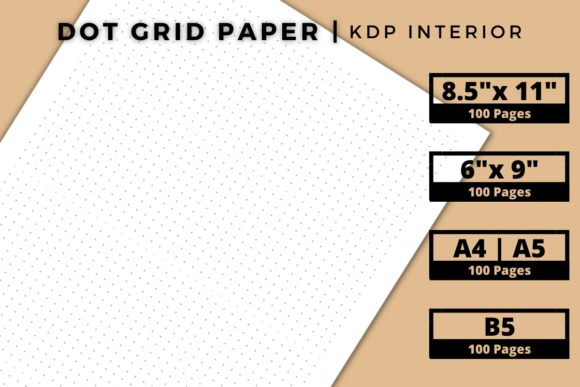
When you picture a journal that invites both structured planning and freeform doodling, chances are you’re imagining a dot grid layout. The Dot Grid Notebook Interior for KDP delivers exactly that—a clean, versatile foundation that turns blank pages into a playground for ideas. It’s the kind of interior that doesn’t scream for attention but quietly earns loyalty from bullet journalists, sketchers, note-takers, and anyone who craves just enough guidance to stay aligned without feeling boxed in.
Unlike ruled or graph paper, a dot grid works on a principle of subtle suggestion. The evenly spaced dots sit quietly in the background, offering reference points that support neat handwriting, symmetrical diagrams, or freehand illustrations. This interior was built with the realities of self-publishing in mind: you get a ready-to-upload PDF that saves hours of layout work while maintaining the kind of polish that readers associate with premium stationery. The dot pattern stays consistent from margin to margin, never shifting or fading, so every page feels intentional.
What makes this interior stand out is its visual restraint. The dots are printed in a light, neutral tone that won’t compete with ink, pencil, or marker. This design choice aligns with usability research in modern typography and information design—the less visual noise on a page, the more cognitive space the user has for their own content. By treating the dots as a design asset rather than a decorative element, this interior fosters both focus and freedom. It’s a quiet canvas that amplifies whatever you bring to it.
Why a Dot Grid Layout Elevates Your KDP Notebooks
Many creators assume that a blank page offers the most freedom. In practice, total emptiness can feel intimidating. A dot grid strikes a balance: it gives just enough structure to anchor drawings, align text, or create charts, while staying transparent enough to let imagination roam. For a KDP publisher, this flexibility becomes a serious selling point. You aren’t limiting your audience to one notebook “personality”; you’re offering a multipurpose tool that suits planners, artists, and general note-takers equally well.
The Dot Grid Notebook Interior for KDP makes it simple to cater to multiple markets under one product umbrella. A student might use it for sketch notes and revision diagrams, while an entrepreneur builds a custom bullet journal for tracking quarterly goals. A handbook user appreciates the modular structure for habit tracking, while a designer layers rough wireframes directly onto the page. Each use case feels native because the dots never dictate, they just suggest.
Professionally, that adaptability translates into higher perceived value. Customers who buy a dot grid notebook often keep repurchasing because it adapts to their evolving needs. That builds retention for your KDP catalog. And because this interior is optimized for all popular sizes—A4, US Letter, A5, 6x9 inches—you can target everything from pocket carry notebooks to oversized desk planners under a single brand umbrella. No resizing headaches, no formatting guesswork.
Visual Personality and Clean Aesthetics
The personality of a good dot grid interior is understated sophistication. There’s nothing trendy about it, which is precisely why it ages well. When I look at a page from this interior, the dots feel like a breathing grid—structured but airy. The spacing encourages white space, a principle that editorial design and brand identity professionals swear by. Your handwriting or drawings sit generously surrounded by light, making the contents easier to scan and revisit.
This aesthetic pairs beautifully with a wide range of cover designs. Whether you’re creating a minimalist kraft-paper look, a vibrant floral pattern, or a corporate logo notebook, the interior never clashes. The neutrality of the dot pattern functions much like a well-chosen sans serif font in web design—it recedes into the background and lets the content take center stage. Yet unlike a purely blank book, it retains enough visual texture to feel purposeful.
From a production standpoint, the interior’s light dots also mean low ink consumption during printing, which can be a subtle marketing advantage if you’re positioning your notebooks as eco-conscious or budget-friendly. And because the layout is delivered as a high-resolution PDF, every dot remains crisp whether printed on demand by KDP or a third-party manufacturer. No fuzzy guidelines, no uneven lines—just consistent, repeatable quality.
Practical Applications Across Creative and Professional Fields
A dot grid interior may seem niche, but its real-world applications cut across industries. Here’s how different users integrate it into their workflows:
- Bullet journaling and personal organization: The dots provide vertical and horizontal alignment for creating calendars, habit trackers, and mood logs. Users can draw straight lines freehand or use the dots as natural snapping points for spreads.
- Sketching and ideation: Artists and designers often prefer dot grids over blank paper because they offer quick scale references without the visual clutter of full graph lines. It’s a favorite for concept roughs and thumbnail sketching.
- Hand lettering and calligraphy practice: Dots act as invisible baselines and x-height guides, making them ideal for practicing consistent letterforms. When paired with a handwritten font or brush pen style, the grid helps maintain rhythm without imposing rigid rules.
- STEM and education: Students use the dots to draw chemical structures, geometric proofs, or mind maps, all while keeping text neatly aligned for lecture notes.
- Business planning: Entrepreneurs build lean canvases, project timelines, and SWOT analyses directly onto dotted pages. The layout supports visual thinking, which often surfaces insights faster than linear text alone.
If you’re publishing a notebook that positions itself as a “creative journal” or “idea pad,” the Dot Grid Notebook Interior for KDP lets you truthfully claim that it serves a wide creative audience. You aren’t faking functionality—you’re offering a genuine tool. That authenticity comes through in product descriptions and preview images, building trust and reducing return rates.
How Dot Grids Enhance Readability and Brand Identity
Readability in a notebook doesn’t just refer to legible handwriting. It’s about how effortlessly the user can navigate their own notes later. The subtle presence of dots creates an underlying rhythm that guides the eye smoothly across the page. When someone reviews a meeting log or a recipe jotted weeks ago, the consistent spacing helps information land clearly, almost like a silent grid reinforces memory placement.
From a branding perspective, the interior you choose says a lot about your publishing line. A dot grid signals intentionality and a design-forward mindset. Much like a type designer selects a premium font to convey trust and refinement, a publisher who offers dot grid interiors is signaling to buyers that you care about the user’s creative process. This subtly aligns your brand with qualities like clarity, adaptability, and modern professionalism.
For content creators building an identity around planning, wellness, or productivity, the Dot Grid Notebook Interior for KDP becomes part of a larger brand identity ecosystem. It’s a tactile product that extends the digital persona into the physical world. Paired with coordinating covers, consistent color palettes, and maybe a matching downloadable script font or icon set for digital planners, you create a cohesive experience that fans recognize instantly. That kind of brand consistency drives loyalty and word-of-mouth growth.
Choosing the Right Dot Grid Interior for Your Project
Not all dot grid interiors are created equal, and a smart publisher evaluates a few key factors before uploading to KDP.
Dot spacing matters. The industry norm is 5mm between dots, but some interiors offer 3mm or 4mm for finer work. The interior we’re discussing uses a classic 5mm spacing, which hits the sweet spot for most handwriting sizes and drawing tools. If your audience leans toward technical drawing or tiny penmanship, check if alternative spacings are available. For general creativity, the standard 5mm avoids feeling cramped while still providing guidance.
Dot opacity and size. Too dark, and the dots compete with your content. Too faint, and users can’t see them in dim lighting. A properly calibrated dot—around 10–15% black or medium gray—works like a well-kerned typeface: invisible when you’re reading, yet structurally essential. Test a printed sample before finalizing your KDP listing to make sure the dot visibility works under everyday lighting.
Margins and gutter. The Dot Grid Notebook Interior for KDP includes balanced inner margins that account for perfect-bound books. Nothing is lost in the spine, and the pattern extends edge to edge without awkward cutoff. This attention to print production detail saves you from customer complaints about content disappearing into the fold.
File format and bleed. A KDP-friendly PDF with embedded 300 DPI dots and appropriate bleed settings ensures Amazon’s print engine won’t reject your manuscript or shift elements. Check that the interior file is formatted for the exact trim size you’re using—A5, 6x9, 8.5x11, etc. The product covers all these sizes, but it’s wise to preview using Kindle Create or a similar tool before publishing.
Commercial licensing clarity. When you purchase a digital interior, you’re essentially buying a commercial font-like license to use the design in your own published products. The license should allow unlimited print runs on KDP without additional royalties or attribution. Always verify these terms so you can scale your catalog confidently.
Seamless Integration with Your Publishing Workflow
One of the biggest time sinks for KDP creators is designing notebook interiors from scratch. You wrestle with alignment, test prints, and tweak spacing endlessly. With a pre-made interior, you skip that cycle and go straight to creative packaging—designing covers, writing listings, and testing keywords. The Dot Grid Notebook Interior for KDP arrives as a ready-to-use PDF, which you can drop into your chosen trim size project file. From there, you can add a title page, an index, or a few custom pages at the front to brand it as your own, while retaining the professional core.
Think of this interior like a well-crafted typeface for your book’s skeleton. It sets the tone, governs the user’s rhythm, and determines how much they enjoy interacting with each page. But unlike a display font that might overshadow content, this layout steps back. It lets the customer’s own handwriting, sketches, and stickers become the star. That generosity translates into glowing reviews and repeat purchases, because the user feels empowered, not visually bossed around.
If you’re building a series of notebooks—perhaps a dotted journal, a lined journal, and a blank sketchbook—this interior forms a cornerstone. Pair it with a minimalist cover series, and you’ve got a cohesive line that looks intentional without requiring expensive custom design. For digital creators branching into physical products, the low barrier to entry means you can test market demand quickly and iterate based on real customer feedback.
And don’t underestimate the power of cross-promotion. A well-designed dot grid notebook often appears in social media graphics and flatlay photos. When influencers or customers share their bullet journal spreads, the quality of the interior reflects back on your brand. Sharp, evenly spaced dots photograph beautifully, elevating the perceived value of your entire catalog. It’s the kind of organic marketing that paid ads can’t replicate.
Whether you’re a seasoned KDP publisher or just launching your first physical product, the Dot Grid Notebook Interior for KDP removes guesswork while delivering a polished, user-first experience. It doesn’t try to be trendy; it leans into timeless utility. That focus on long-term usefulness is exactly what keeps customers returning and what makes a notebook feel like a trusted companion rather than just another spiral-bound commodity.