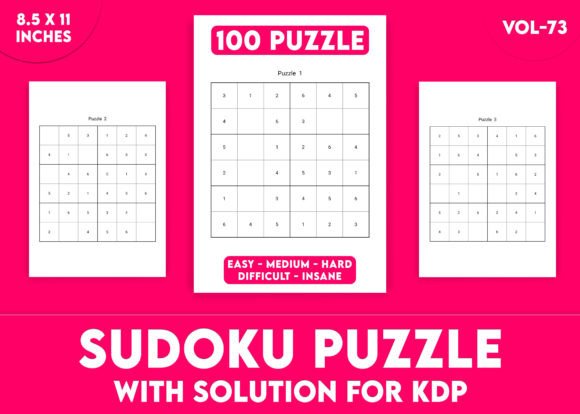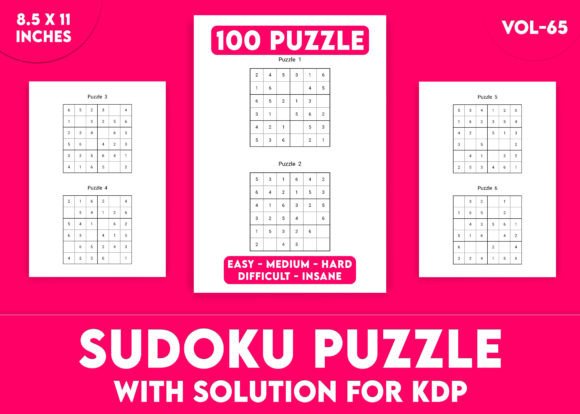
Sudoku Puzzles for KDP Interior Vol-65: A Practical Resource for Streamlining Your Puzzle Book Publishing Workflow
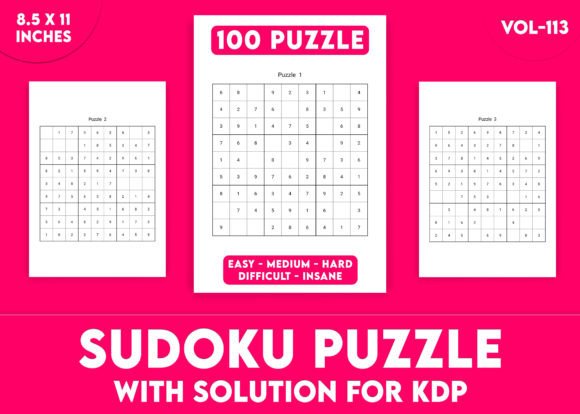
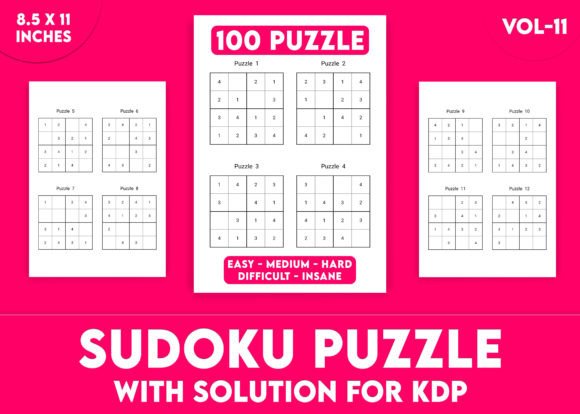
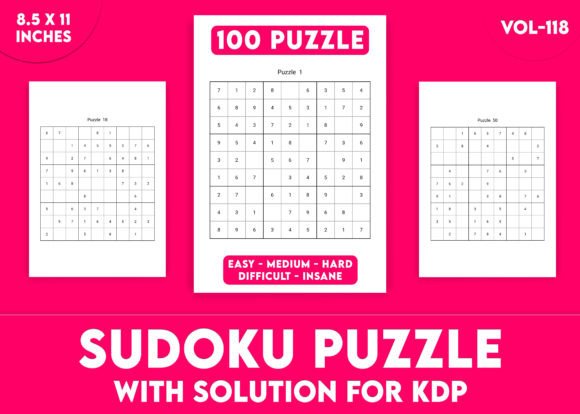
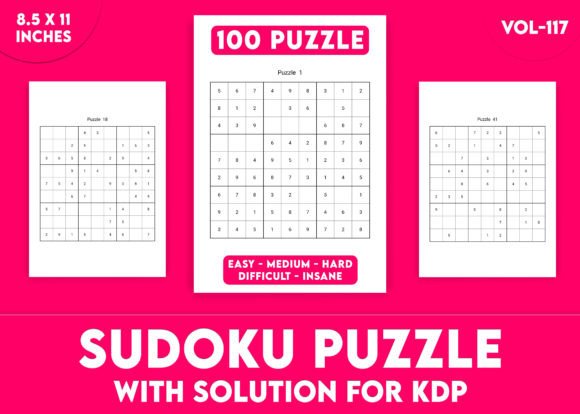
For creators building a catalog of low-content books on Kindle Direct Publishing, the time between idea and live listing often hinges on one bottleneck: interior file preparation. Sudoku Puzzles for KDP Interior Vol-65 removes that friction. It’s a ready-to-use, editable PDF filled with 100 challenging Sudoku puzzles, complete solutions, and formatted for a large 8.5 x 11 inch trim — one of KDP’s standard paperback sizes. When you understand how this asset fits into a repeatable publishing routine, you move faster from concept to customer without sacrificing quality or consistency.
This interior doesn’t exist in a vacuum. It becomes valuable precisely when you map it to the stages of your publishing calendar: market research, asset assembly, cover matching, upload configuration, and post-launch iteration. Used with a clear plan, a single interior like this can anchor a whole product line or serve as a quick launch to validate demand in the puzzle niche.
Understanding the Role of Ready-Made Interiors in Your Publishing Workflow
In a classic KDP workflow, you identify a niche, create or source content, format pages to meet trim and bleed specifications, build a complementary cover, verify print readiness, and publish. Designing puzzle layouts from scratch — numbering grids, ensuring symmetrical spacing, keeping font sizes legible for older adults — often eats 6 to 10 hours per title. A pre-formatted interior shifts that time into strategic tasks: keyword research, cover design differentiation, and product description optimization.
Sudoku Puzzles for KDP Interior Vol-65 fits into the production phase of that sequence. Instead of opening a blank design canvas, you open a file that already meets core technical standards. You then assess what customization, if any, the project needs. This could be as simple as adding a title page with your brand name inside the editable PDF or as involved as layering a subtle dot-grid background to match a series aesthetic. Because the interior is editable, you can make these adjustments in tools like Adobe Acrobat Pro, Affinity Publisher, or even free PDF editors that support text and image insertion, without rebuilding puzzles from scratch.
What’s Inside Sudoku Puzzles for KDP Interior Vol-65
Before integrating this file into your next project, it helps to know exactly what you’re working with. The interior delivers a self-contained puzzle book experience:
- 100 Sudoku Puzzles spanning a range of difficulty. This mix supports both beginner-friendly listings and “challenging” branding — you can describe the book as hard, easy-medium, or all-level depending on your target audience analysis.
- Complete solution pages following the puzzle section. This design mirrors what buyers expect: puzzles first, answers at the back for quick reference. The structure also helps with Amazon’s “Look Inside” feature, where a logical flow improves browse-to-buy conversion.
- Editable PDF file so you can insert your own copyright page, a brief welcome note, usage tips, or even a call-to-action linking to your other titles. Editing capability directly affects how you adapt one interior across multiple book variations.
- Large 8.5 x 11 inch format. This trim size is comfortable for handwriting and widely accepted by KDP’s print-on-demand system. It eliminates the need to recalculate margins or rescale content for a different size — a common error that causes auto-rejection during upload.
By verifying these elements early, you reduce the back-and-forth between design and preview tools. The file arrives ready for upload, but taking 15 minutes to inspect grids, solution accuracy, and PDF page count saves hours later.
Preparing the Editable PDF for a Professional Print Book
Even a well-built interior needs a final quality pass before it enters the KDP pipeline. Treat this as a short, checklist-driven process, not a creative overhaul. Here’s a practical sequence that works regardless of your design skill level:
- Open the PDF in your editor and confirm the page dimensions. Navigate to file properties and verify the size matches 8.5 x 11 inches with no unintentional scaling. If the original creator included bleed, check that it extends correctly to the outer trim edge; many 8.5 x 11 puzzle books work fine without bleed, but if your cover uses bleed, the interior should optionally support it for a seamless look.
- Review margin placement. KDP’s guidelines recommend minimum margins of 0.25 inches inside the trim, but for a workbook-style product, you want at least 0.5 inches on the binding side to prevent puzzles from disappearing into the gutter. Flip through the PDF in two-page view to feel how the grid sits on the page. Adjust if necessary using the editor’s crop or repositioning tools.
- Add your custom front matter. Insert a blank page at the very beginning for a half-title, or drop in a pre-designed title page that brands the book with your publishing imprint. If you sell multiple puzzle books, consistent front matter helps shoppers recognize your series instantly.
- Save a print-ready version. Retain a master editable copy and export a flattened, high-resolution PDF for upload. This prevents font embedding issues and keeps file sizes manageable under KDP’s 650 MB limit.
This preparation stage aligns with production planning. If you’re scaling, batch-process several interiors in one sitting — rename files clearly (e.g., Sudoku-Vol-65-Paperback-Final.pdf) and store them in a structured cloud folder. Such an organization habit prevents version confusion when you revisit older titles for updates.
Integrating the Interior with Cover Design and KDP Upload
The interior does not stand alone; its interaction with the cover file and the KDP dashboard determines how fast your book goes live. Because the interior is already 100 pages of puzzles plus a few solution pages, you know your exact page count before you design the cover. This matters: KDP’s Cover Calculator needs the final page count to generate a correctly sized cover template. Use the actual trimmed page count (not including the blank pages you may have added) and select white paper or cream paper — puzzle books typically work better on white paper (90–100 GSM) for crisp grid lines.
When building the cover, keep these process points in mind:
- Match aesthetic tone. The interior is structured and clean; your cover should reflect that with a no-nonsense “brain teaser” or “mindful focus” theme. Use large, readable titles that mention “100 Challenging Sudoku Puzzles” prominently, as this aligns with the interior content and helps with keyword relevance in search.
- Coordinate spine text. A 100-page interior yields a spine thickness around 0.22–0.25 inches, depending on paper selection. KDP requires at least 0.24 inches for spine text. Confirm with the Cover Calculator, then add a clear spine title if thickness allows. This small detail influences how the book looks on a physical shelf.
- Test the complete package. Upload both interior and cover files in KDP’s “Paperback Content” section, then launch the online Previewer. Flick through all pages, paying special attention to left-right alignment on puzzles that fall on even pages. Use the “Look Inside” experience as the customer would — a quick check here flags margin shifts or content cut-off.
Many KDP publishers use Sudoku Puzzles for KDP Interior Vol-65 as the base interior, then create variant covers targeting subtopics: “Sudoku for Adults”, “Relaxing Brain Games”, “Large Print Sudoku”, or even seasonal editions. One interior, multiple listings — a common tactic to test cover-driven demand without reworking the core puzzle content. This method interacts with your market research stage; you can analyze which cover titles and categories generate better BSR ranks, then double down on winners in future volumes.
Quality Control and Long-Term Use Considerations
Sustainability in low-content publishing depends on repeatable quality. An interior that misprints one puzzle or fails the KDP automated checks damages your reviews and returns. Build a brief quality gate into your release routine:
- Validate solutions randomly. No need to solve all 100 puzzles, but verify 5–10 randomly and compare answers across difficulty levels. If any discrepancy appears, correct the solution page in the editable PDF before publication.
- Check for print contrast. Print a sample page at home on standard letter paper to see if the grid lines and numbers are dark and crisp. Adjust the PDF’s line weight or color profile if necessary; faint puzzles frustrate older buyers — a key demographic for large-print formats.
- Archive the original file. Keep the unaltered download as a reference. Future updates or derivative works (like creating a spiral-bound version) benefit from an untouched template.
Over time, you may find that Sudoku Puzzles for KDP Interior Vol-65 works as a reliable baseline asset. You can pair it with other puzzle book interiors from the same series to create bundled offerings. If you ever need to refresh content (due to Amazon’s duplication policies or customer feedback), having the editable file lets you swap out front matter, adjust copyright years, or add new notation without rebuilding puzzles.
From File Download to Live Listing: A Typical Implementation Path
Let’s walk through a realistic half-day implementation using this interior. This path assumes you’ve already performed niche research and identified “sudoku puzzle books for mental fitness” as a profitable subcategory.
- Download and archive the PDF. Make a copy and rename it for your project.
- Customize front matter in 20 minutes: add a title page, a short “How to Play” note if you target beginners, and a personalized thank-you page with a URL to your mailing list.
- Calculate final page count and use KDP’s Cover Calculator to get a template. Design the cover in Canva or Photoshop using dimensions from the template, featuring titles like “100 Challenging Sudoku Puzzles: Large 8.5 x 11 Workbook for Adults”.
- Upload interior and cover to KDP. Set pricing based on royalty calculations, choose categories such as “Games & Activities > Puzzles” and “Crafts & Hobbies > Activity Books”, and select keywords that reflect the interior’s features: large print sudoku, sudoku puzzle book with solutions, etc.
- Preview and approve within an hour. If all goes well, approve the proof and set a launch date.
This sequence reduces typical creation time from days to a focused morning. The editable nature of the PDF means you’re never blocked on formatting; you only spend time on value-added customizations that distinguish your product from other generic puzzle books.
Scaling Your Puzzle Book Portfolio with Consistent Templates
Once one Sudoku volume is live, the next logical step is expansion. Use the same interior structure as a brand consistent template. You could, for instance, release a “Sudoku Vol-66” with a different puzzle set (if you purchase another interior from the series) or repurpose the PDF by changing only the cover to appeal to a completely different demographic — say, nurses, travelers, or puzzle club members. Because the interior’s layout and solution placement remain uniform, your readers enjoy a familiar experience regardless of which volume they buy.
From a long-term business perspective, this approach reinforces quality consistency. Each book in your catalog shares the same legible font, the same grid spacing, and the same trim size. This makes building a series page on Amazon straightforward and improves customer trust. It also simplifies advertising: your Sponsored Products campaigns can point to a single ASIN and then allow organic discovery of the series.
Moreover, when you treat Sudoku Puzzles for KDP Interior Vol-65 as a reusable resource, you unlock a modular content library. If you later decide to create a “Mixed Puzzle Book”, you can extract the Sudoku section from this file and combine it with crosswords or word searches from other interiors — all while maintaining consistent margins and pagination. This composability is a hallmark of a well-organized publishing pipeline.
Adapting the Interior for Different Use Cases Beyond Pure Entertainment
While many publishers position Sudoku books as casual pastimes, the same interior fits into goal-oriented niches equally well. Consider these adaptations, all achievable by modifying the front matter and cover messaging only:
- Productivity-focused planners who use puzzle breaks as a cognitive refresh technique. Your book description could reference “screen-free mental reset” for professionals.
- Educational tools for teachers and tutors. The 8.5 x 11 size leaves room for margins where students can note solution times or strategies. Add a simple tracking chart as a page insert to turn the book into a learning tool.
- Senior brain health activity books. Trim size and clear numbering already support older readers; you only need to emphasize large-print terminology in the listing.
These pivots require zero changes to the puzzle grids. The editable PDF allows you to insert a few instructional pages, making the same 100 puzzles serve multiple buyer intents. This is where process thinking pays off: a single high-quality interior asset reduces the cognitive load of launching each new variant.
Efficiency Gains and Common Pitfalls to Avoid
A ready-made interior like Sudoku Puzzles for KDP Interior Vol-65 accelerates the creation process, but it’s not immune to user missteps. Stay mindful of these practical points to maintain smooth operations:
- Duplicate content flags. Amazon does not strictly penalize puzzle books for having identical puzzle layouts, but it’s wise to add distinctiveness — a unique introduction, a different puzzle order, or a themed border — to avoid automated content review issues.
- File corruption during edits. Always keep an untouched backup. When editing, save incrementally and test the PDF in a standard viewer before uploading to KDP. A corrupted file can cause timeout errors in the previewer.
- Overlooking the “solutions at the back” expectation. Don’t place solutions immediately after each puzzle; this breaks the standard buyer journey. The included interior already follows the conventional front-to-back structure, so only modify if you intentionally want a different format (and understand the customer experience implications).
On the positive side, speed doesn’t have to compromise quality. Because the puzzles are thoughtfully crafted to balance difficulty and solvability, you’re delivering a product that actually meets the promise made in the title. That alignment between marketing text and interior content directly supports positive ratings — a crucial element of long-term selling on KDP.
For those building a publishing business, Sudoku Puzzles for KDP Interior Vol-65 is more than a one-off download. It’s a workflow component that slots into a repeatable system. You plan your niche, you grab a proven interior, you adapt the wrapper, and you publish. Over time, that system lowers your average cost per title while maintaining the kind of consistency that turns one-time buyers into repeat customers.