Sudoku Puzzles for KDP Interior Vol-113: A Practical Resource for Publishers, Creators, and Puzzle Enthusiasts
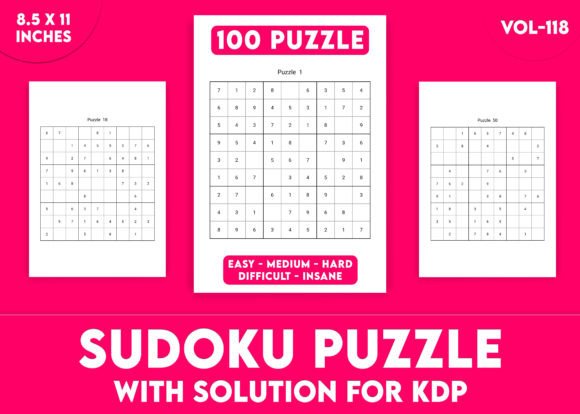
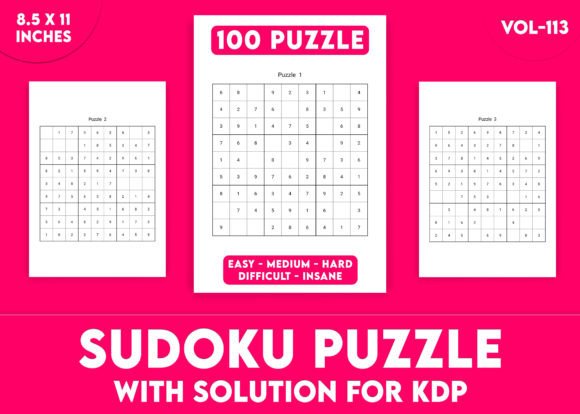
When you decide to create a Sudoku puzzle book, the interior file is often the biggest hurdle—sourcing reliable, well-calibrated puzzles, formatting them consistently, and ensuring the whole thing looks professional on the page. Sudoku Puzzles for KDP Interior Vol-113 addresses that bottleneck directly. It is a ready-to-use, editable PDF collection of 100 challenging Sudoku puzzles with solutions, laid out on 8.5×11-inch pages. But its real value extends far beyond a simple file download. Understanding where it fits into your publishing workflow, how to adapt it to your brand, and how to leverage it for long-term projects turns a static resource into a reusable asset.
What This Interior File Actually Contains
Before integrating the file into a project, it helps to know exactly what arrives. The download gives you an editable PDF, not just a flat, unchangeable printout. That distinction matters for anyone who needs to add a logo, change the puzzle numbers, tweak margins for a bleed version, or insert blank note pages. The core components include:
- 100 unique Sudoku puzzles spanning from moderate to hard difficulty. The range is designed so an average solver can progress without hitting unsolvable frustration, while still feeling challenged.
- Complete solutions for every puzzle, placed in a clean, easy-to-read grid format. No flipping between awkwardly formatted pages.
- Consistent 8.5×11-inch layout that matches standard US trade paperback dimensions, removing the guesswork from trim size selection.
- Editable source file that lets you make text changes, move elements, or rebrand without rebuilding from scratch.
For many low-content book creators, this package replaces 10–20 hours of puzzle sourcing, generation, verification, and layout work. The puzzles are already tested for solvability and unique solutions—a non-trivial quality step that prevents negative reviews from customers who encounter broken grids.
Where Sudoku Vol-113 Fits in Your Publishing Workflow
Think of the interior as a midpoint in a larger process: you have an idea for a puzzle book, you need the content, and then you need to launch. Sudoku Puzzles for KDP Interior Vol-113 sits between the conceptual stage and the final packaging stage. It doesn’t replace your cover design, your keyword research, or your marketing plan, but it makes everything downstream faster because you aren’t wrestling with puzzle creation yourself.
Here is a typical path for a KDP creator who uses this asset:
- Market and niche selection: You decide whether to target seniors, travelers, “hard puzzle” fanatics, or relaxation seekers. The puzzle difficulty and layout can then be subtly angled with your cover and title.
- Interior acquisition: You download Vol-113 and immediately inspect the puzzles and solutions. Because the PDF is editable, you can add a “This book belongs to” page or a brief instruction page at the beginning without leaving the file.
- Brand integration: You insert your publisher name, website, or a call to action for other books. Small touches like a footer with your brand logo make the book look professionally produced.
- Cover design alignment: Knowing the interior is exactly 100 puzzles gives you a fixed page count. You calculate spine width, choose a cover theme that matches the “challenging” angle, and finalize.
- KDP upload and review: With a validated interior, the review process goes smoother because formatting errors are rare.
For entrepreneurs running multiple puzzle books, this template-based approach lets you release a new volume in a fraction of the time. You can even create a series by reusing the same interior file with varied covers, or by mixing in a few custom puzzle pages to create a “special edition.”
Practical Customization: Making the Editable PDF Your Own
Because the file is provided as an editable PDF, you don’t need expensive layout software. Tools like Adobe Acrobat Pro, Inkscape (with PDF import), or even Canva’s PDF editor allow you to make targeted changes. The most common customizations include:
- Adding an introductory page: A brief note welcoming the solver, explaining the difficulty levels, or providing a QR code to a bonus puzzle pack. This builds a connection and encourages repeat buyers.
- Modifying the header/footer: If you want every page to display the puzzle number or a small logo, you can adjust these areas. Keep changes subtle so the puzzle grid remains the focal point.
- Adjusting solution placement: Some publishers prefer to put solutions immediately after each puzzle; others group them at the end. The editable format lets you rearrange pages to suit your audience’s preference.
- Resizing for alternate trim sizes: While 8.5×11 is standard, you can scale the content to fit 8×10 or even A4 with a slight margin adjustment. Always test print before finalizing.
A word of caution: before heavy editing, save a backup copy. Work incrementally, and periodically print a sample page to ensure alignment remains intact. The goal is to enhance personalization without breaking the core puzzle formatting that makes the file valuable.
Integrating With Other Tools and Resources
No interior file exists in isolation. You’ll couple Sudoku Puzzles for KDP Interior Vol-113 with a cover designer (or Canva template), Amazon KDP’s guidelines, and possibly a keyword tool like Publisher Rocket. The process interactions are often overlooked but critical:
- Cover creation: Since you know the exact number of pages, you can calculate spine width accurately. Use KDP’s spine width formula or a template generator. A mismatch between cover spine and interior thickness leads to printing errors, so having the final PDF first eliminates rework.
- Keyword and metadata optimization: The puzzles are challenging; this translates into title phrases like “Hard Sudoku Puzzle Book for Adults” or “101 Difficult Sudoku Puzzles.” Your keyword list, subtitle, and even the book description should reflect the intensity of the puzzles you’re actually offering. The interior’s difficulty range informs your marketing copy, not the other way around.
- A+ Content and “Look Inside”: Because the PDF already looks clean and professional, you can capture a screenshot of a puzzle page and a solution page for your KDP’s “From the Publisher” section. This gives shoppers a transparent preview, reducing return rates.
Quality Control Steps Before You Hit Publish
Even a well-crafted interior file needs verification. Before uploading, follow this quick checklist:
- Open the editable PDF in multiple readers: Adobe Acrobat, Preview (Mac), and even a browser-based PDF viewer. Look for font rendering issues or shifted grids.
- Print 2–3 physical pages at actual size on a standard home printer. Check that puzzle numbers, cell borders, and solution digits are sharp and not cropped.
- Solve a few puzzles from the printed copy to confirm that the grids are error-free and that solutions match. While the file is advertised as tested, paper alignment can occasionally introduce visual artifacts.
- Verify page numbering if you’ve added any front matter. Mismatched page references in a solution section annoy customers and prompt bad ratings.
- Use KDP’s online previewer after uploading. Flip through every page, paying special attention to the first and last pages, as those are most prone to conversion glitches.
Taking 20 minutes here can save you days of troubleshooting and customer complaints.
Using the Puzzle Collection Beyond KDP
While the core use case is self-publishing on Amazon, Sudoku Puzzles for KDP Interior Vol-113 also serves personal and business goals outside of a published book. For a productivity-minded professional, keeping a stack of printed puzzles in a folder serves as a non-digital mental reset between deep work sessions. A coach or educator might use selected puzzles as warm-up exercises in a logic or math class. Small business owners often include a printed puzzle sheet in welcome packages or as a creative direct-mail insert—something tangible that keeps the recipient engaged for minutes, not seconds.
Even if you never upload a single file to KDP, the editable PDF can be reconfigured as a team-building activity. Print 10 copies of the same puzzle and hold a timed challenge at an office retreat. Because you have the solutions, scoring is instant. The asset’s versatility makes it more than just a publishing product; it’s a reusable resource that adapts to the context.
Building a Long-Term System for Puzzle Book Publishing
Entrepreneurs who succeed with low-content books rarely stop at one volume. They create a system. Sudoku Puzzles for KDP Interior Vol-113 can become a cornerstone of a recurring revenue model if you treat it as a template. After publishing the first book, you can return to the editable PDF, shuffle puzzle order, replace 20% of the puzzles with slightly harder ones (if you have the tools to generate and verify new grids), add a fresh cover, and release a second volume. The structural backbone remains, so each subsequent launch requires less design effort.
Another approach: use the interior for a spiral-bound puzzle book via a service like Lulu or IngramSpark if you want to reach offline retailers. Because the file is cleanly formatted, it translates well to different print-on-demand platforms with minimal adjustment.
For marketers, the puzzle book becomes a lead magnet. Extract 10 puzzles from the collection (with proper attribution changes), package them as a free downloadable PDF, and use it to build an email list. Then direct subscribers to the full book. This transforms the interior from a one-time product into a funnel component.
Observations on Print Quality and User Experience
A downloadable interior file is only as good as its printed result. The 8.5×11-inch layout provides generous margins, reducing the chance that content gets lost in the gutter during binding. That’s especially important for a puzzle book where the user needs to write directly in the grid. Wider inner margins give a comfortable writing field. If you decide to add a glossy cover or high-quality paper through KDP’s options, the interior’s clean black-and-gray grid holds up well without bleeding.
The solutions section is designed for clarity, not decoration. Each solution grid sits uncluttered on its own page or a clean layout, so solvers can check answers quickly. This small detail reduces frustration and makes the book feel more usable. When you test print, note whether the solution page falls on the back of a puzzle page or on a fresh page. If possible, arrange the PDF so that solutions start on a new page, preserving the solve-before-peeking experience.
Avoiding Common Mistakes with Pre-made Interiors
Even with a high-quality file like this, pitfalls exist. One common error is neglecting to adapt the file’s metadata. When you save the edited PDF, ensure the document title, author name, and subject fields don’t carry over the original template’s internal data. In Adobe Acrobat, clear these under File > Properties. Search engines index PDF metadata, and leftover info can dilute your brand.
Another oversight: over-editing. It’s tempting to add elaborate borders, background images, or watermark patterns, but KDP’s print file requirements have strict ink coverage limits. Excess ink near the edge can trigger printing rejections. Stick to simple, clean additions. The puzzle itself is the star.
Finally, consider the solution-checking flow. If you place all solutions at the end, be explicit in the introductory page: “Solutions begin on page 113.” This small guidance prevents users from thinking the book is incomplete.
Next Steps After Publishing: Monitoring and Iteration
Once your book is live, customer feedback will inform your next move. If reviews praise the challenge level, consider a “Vol-114” with slightly harder puzzles. If readers request a smaller travel-friendly size, you can use the editable PDF as a base and scale it down to 6×9 inches, though that requires more significant reformatting. Keep the original file untouched as a master template. Version control prevents accidents and lets you iterate rapidly.
For anyone new to KDP, Sudoku Puzzles for KDP Interior Vol-113 lowers the barrier to entry significantly. It lets you focus on the parts of publishing that actually grow your business—niche research, cover design, and marketing—while the puzzle content is handled. For experienced publishers, it plugs into an existing production pipeline as a reliable, low-effort volume that can be launched between more complex projects.
The real value lies in treating it not as a one-off purchase, but as a component you can reconfigure, brand, and deploy across multiple formats and channels. Whether you’re printing a single copy to relax with on a Sunday afternoon or launching a series that generates consistent royalty income, the same file does the heavy lifting.