Mastering Your Week: The Ultimate Guide to 24 Hour Time Blocking and Weekly Planning
Imagine waking up each morning with absolute clarity about what needs to happen and when. No frantic scrambling, no forgotten tasks, and no overwhelming sense that the day is slipping through your fingers. This is the promise of 24 hour time blocking—a powerful productivity method that transforms how you approach your weekly schedule, lesson planning, and daily routines. Whether you're an educator building a weekly lesson plan, a student juggling multiple subjects, or a professional seeking better work-life balance, understanding this system can fundamentally change your relationship with time.
In this article, we'll explore everything you need to know about 24 hour time blocking, how it integrates with a weekly planner, and why printable hourly schedule tools have become essential for anyone serious about productivity.
What Is 24 Hour Time Blocking?
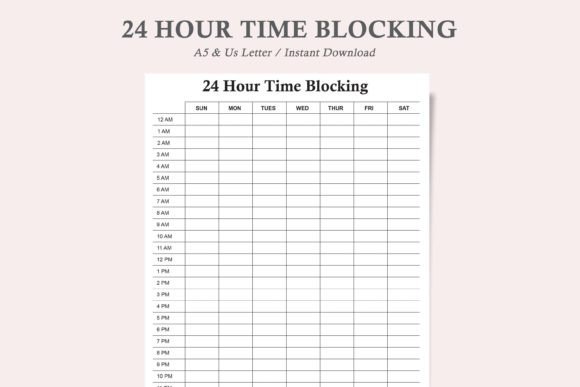
At its core, 24 hour time blocking is a scheduling technique where you divide your entire day into distinct segments—typically hour by hour—and assign specific activities, tasks, or subjects to each block. Unlike traditional to-do lists that simply catalog what needs to be done, time blocking forces you to confront the reality of how much time you actually have and make intentional decisions about how to use it.
Think of it as creating a budget for your time. Just as a financial budget allocates every dollar to a purpose, a 24 hour time blocking weekly planner allocates every hour to an activity. This approach acknowledges a fundamental truth: we all have the same 168 hours each week, and how we distribute them determines everything about our productivity, learning outcomes, and overall satisfaction.
The concept has roots in Cal Newport's deep work philosophy and has been embraced by executives, creatives, and educators alike. What makes the 24 hour variant particularly powerful is its comprehensiveness—it accounts for the full day, including morning routines, breaks, personal time, and sleep, not just work hours.
Why Traditional Planning Falls Short
Most people rely on fragmented systems to manage their time. They might keep a digital calendar for appointments, a separate daily planner for tasks, sticky notes for reminders, and mental notes for everything else. This scattered approach creates what psychologists call "cognitive load"—your brain constantly tracks unfinished tasks, leading to stress and reduced performance.
A weekly schedule that uses time blocking solves this by consolidating everything into one visual framework. When you see your entire week mapped out hour by hour, patterns emerge. You might notice that you're consistently overcommitting on Wednesdays, that your creative work always happens in the morning, or that certain subjects require more time than you allocated.
The Anatomy of an Effective Time Blocking System
What separates a truly functional time blocking timetable from a wishful thinking exercise? Several key elements make the difference between a planner that works and one that gathers dust.
Hourly Granularity with Flexibility
An hourly schedule provides enough structure to keep you on track without becoming oppressive. Each hour represents a meaningful chunk of time—long enough to accomplish something substantial, short enough to maintain urgency. However, the best systems also build in buffer blocks and transition time between activities, acknowledging that humans don't switch contexts instantaneously.
Designated Sections for Different Life Domains
A well-designed 24 hour time blocking planner includes clear sections for different types of activities. For educators, this might mean separate blocks for lesson preparation, classroom instruction, grading, and professional development. For students, it could distinguish between lecture time, study sessions, project work, and extracurricular activities.
Visual Clarity and Minimal Distraction
The most effective printable planners embrace minimalist, ink-friendly design. When you're trying to focus on your schedule, the last thing you need is decorative clutter competing for your attention. Clean lines, adequate writing space, and logical layout help your brain process information quickly and reduce decision fatigue.
Time Blocking for Education: The Lesson Tracker Revolution
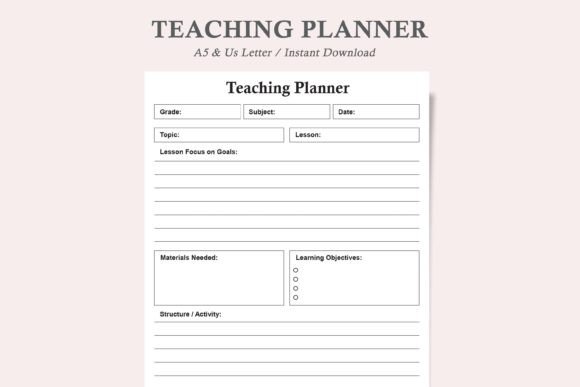
Teachers face unique scheduling challenges that make time blocking especially valuable. A typical educator juggles multiple classes, preparation periods, grading sessions, meetings, and professional development—all while trying to maintain work-life boundaries. This is where a dedicated lesson tracker and class schedule integrated into a time blocking system becomes transformative.
Consider how a weekly lesson plan functions within a 24 hour framework. Rather than simply listing topics to cover, you allocate specific time blocks for each subject, ensuring balanced attention across your curriculum. You can plan differentiated instruction periods, one-on-one student conferences, and assessment windows without overloading any single day.
The printable format offers particular advantages for educators. You can print a new page whenever you need to adjust your schedule, share physical copies with teaching assistants, or post visible schedules for students who benefit from routine and predictability. The tactile act of writing also reinforces memory and commitment in ways that digital tools sometimes fail to match.
How to Create Your First 24 Hour Time Blocking Weekly Schedule
If you're new to this method, the prospect of planning every hour can feel daunting. Here's a step-by-step approach that makes the process manageable and sustainable.
Step One: Establish Your Fixed Commitments
Start by blocking out non-negotiable appointments, class times, meetings, and obligations. These form the skeleton of your weekly schedule. Include commuting time, regular meals, and adequate sleep—treating these as essential rather than optional fundamentally shifts how you value your wellbeing.
Step Two: Identify Your Priority Blocks
Before filling in the remaining spaces, identify your most important work. For a teacher, this might be lesson preparation and curriculum development. For a student, this could be focused study sessions for challenging subjects. Place these blocks during your peak energy hours, which for most people fall in the morning.
Step Three: Group Similar Activities
Task switching carries a cognitive cost. Time blocking works best when you batch similar activities together. Grade papers during a single block rather than spreading it across multiple days. Handle administrative tasks in one focused session. This approach preserves mental momentum and increases overall efficiency.
Step Four: Incorporate Buffer and Review Time
The most common mistake in time blocking is creating a schedule so tight that any disruption causes the entire system to collapse. Build in 15-30 minute buffers between major blocks. Schedule a weekly review session—perhaps Sunday evening or Friday afternoon—to assess what worked, what didn't, and how to adjust for the coming week.
Physical vs. Digital: The Case for Printable Planners
In an age of sophisticated calendar apps and productivity software, you might wonder why anyone would choose a printable 24 hour time blocking planner. The answer lies in cognitive science and practical usability.
Research consistently shows that handwriting engages the brain differently than typing. When you physically write your schedule, you process the information more deeply and remember it more reliably. A printed planner also provides a visual overview that's difficult to replicate on a phone screen. You can see your entire week at a glance, quickly spot conflicts, and make adjustments with a pencil and eraser rather than navigating menu options.
Printable planners offer unlimited flexibility. With digital PDF downloads and formats available for both US letter and A5 sizes, you can print exactly the layout you need, when you need it. Run out of pages? Print more. Want to try a different version next semester? Simply download a new file. There's no subscription fee, no software updates, and no battery to drain.
Common Misconceptions About Time Blocking
Despite its effectiveness, time blocking faces several misunderstandings that prevent people from adopting it fully.
"It's Too Rigid"
Many assume that scheduling every hour means living like a robot. In reality, effective time blocking builds in flexibility. Your schedule is a guide, not a prison. When unexpected events occur—and they always do—having a clear picture of your commitments helps you make informed trade-offs rather than reactive decisions.
"I'm Not a Planner Person"
Time blocking isn't a personality trait; it's a skill that anyone can develop. Starting with a simple daily planner and gradually expanding to a full weekly system makes the transition natural. The goal isn't perfection but progress—each week you'll learn more about your rhythms and refine your approach.
"Digital Tools Are More Efficient"
While digital calendars offer convenience features like reminders and sharing, they also introduce distractions. Notifications interrupt focus. Apps compete for attention. A physical planner sits quietly on your desk, ready when you need it and unobtrusive when you don't. Many productive people use both: a digital calendar for shared events and a printable time blocking planner for personal task management.
Adapting Time Blocking for Different Contexts
The beauty of this system is its adaptability. A productivity planner using time blocking serves remarkably different users with equal effectiveness.
For Students
A student's class schedule provides natural structure, but time blocking extends beyond lecture halls. Blocking study time for specific subjects, scheduling breaks to prevent burnout, and allocating hours for projects with approaching deadlines creates a sustainable academic rhythm. Students who time block consistently report lower stress during exam periods because they've maintained steady progress throughout the semester.
For Homeschooling Parents
Homeschooling requires balancing educator and parent roles simultaneously. Time blocking helps distinguish between instructional time, independent work periods, household management, and family activities. Children also benefit from seeing a predictable daily structure, which reduces anxiety and power struggles around transitions.
For Professionals Balancing Multiple Projects
Knowledge workers frequently manage several concurrent projects with varying deadlines. Time blocking prevents the common trap of spending disproportionate time on urgent but unimportant tasks while neglecting strategic work. By protecting blocks for deep work, you ensure progress on meaningful objectives regardless of daily fires that arise.
Maximizing Your 24 Hour Time Blocking Planner Experience
To extract full value from your 24 hour time blocking weekly planner, consider these practical strategies that experienced users employ.
Start your week with a planning ritual. Sunday evening or Monday morning, spend 20-30 minutes reviewing upcoming commitments and setting intentions. This practice transitions your mind into a productive mode and reduces Sunday night anxiety about the week ahead.
Use color coding judiciously. Different colors for different subjects or activity types help your brain process your weekly schedule at a glance. However, avoid overcomplicating the system—three to five categories typically suffice.
Track what actually happens. Use your planner not just for intentions but for recording reality. Note when you deviate from your planned blocks and why. This data becomes invaluable for future planning, revealing patterns you might otherwise miss.
Celebrate completed blocks. Crossing off or checking completed time blocks provides a small dopamine reward that reinforces the habit. Over time, this positive feedback loop makes time blocking feel satisfying rather than burdensome.
The Psychology Behind Why Time Blocking Works
Understanding the psychological mechanisms at play helps explain why this method produces such consistent results across diverse users.
Time blocking reduces what psychologists call "decision fatigue"—the deteriorating quality of decisions after extended periods of choice-making. When you've predetermined what you'll work on during each block, you eliminate countless micro-decisions throughout the day about what to do next. This preserves mental energy for the actual work.
The method also leverages the Zeigarnik Effect, which describes how incomplete tasks occupy mental bandwidth. By scheduling specific times for specific tasks, your brain can relax, knowing that everything has its place. You're less likely to experience that nagging feeling that you're forgetting something important.
Furthermore, time blocking creates artificial deadlines through time constraints. When you know you have exactly one hour for a task, you're more likely to maintain focus and resist perfectionism than when you approach work with an open-ended timeframe.
Getting Started with Your Own 24 Hour Time Blocking System
Ready to transform your relationship with time? The most important step is simply beginning. Download a printable 24 hour time blocking planner—look for clean, professional designs that offer both US letter and A5 size options for versatility. Print a copy and spend thirty minutes mapping out your ideal week, not as a rigid prescription but as a thoughtful hypothesis about how to use your limited hours meaningfully.
Remember that mastery comes through iteration. Your first week won't be perfect, and that's exactly as it should be. Each Sunday, reflect on what you learned and adjust accordingly. Over time, you'll develop an intuitive sense of how long tasks actually take, when your energy peaks and dips, and what balance of activities leaves you feeling accomplished rather than exhausted.
Whether you're planning lessons, managing projects, or simply trying to bring more intentionality to your daily life, 24 hour time blocking offers a proven framework for making the most of the time you have. The hours will pass regardless—the only question is whether you'll direct them or simply watch them go by.